
Astro Arena : 3vs3 Battle PvP
KRAFTON, Inc.Action
4.6745.00 Reviews
- Version
- 1.0
- Installs
- 1.00M
- Age Rating
- Everyone 10+
Screenshots




Our Review of Astro Arena : 3vs3 Battle PvP
 Analysis by Appyee
Astro Arena: 3vs3 Battle PvP is the kind of action game I can open with very little preparation. Its central promise is easy to understand: short player-versus-player matches, quick decisions, and enough team pressure to make every round feel more active than a simple solo arcade session. I found the appeal strongest when I wanted a complete match during a spare moment rather than a long gaming appointment.
That convenience is also the main question behind the game. A fast match can be refreshing during the first week, but a compact multiplayer format has to offer more than speed if it wants to stay installed. In my experience, Astro Arena is most interesting for players who enjoy learning through repetition, adapting to teammates, and making small tactical choices under pressure. It is less suitable for anyone looking for a large adventure, a deep single-player campaign, or a calm game that can be played without reacting to other people.
Why the first week feels so accessible
The first sessions are helped by the straightforward shape of the experience. Three-versus-three combat gives the action a social feel without requiring a huge team. You have allies to read and opponents to watch, yet the battlefield remains easier to understand than a larger team-based game. I could focus on the immediate situation instead of trying to follow a dozen separate events at once.
The short-match design is particularly useful in everyday situations. I can imagine playing a round while waiting for an appointment, taking a break between tasks, or relaxing after work without committing the entire evening. The game’s free entry also makes trying it less complicated. It is available at no purchase price, while optional in-game items range from a small amount to a much larger amount per item, so I would approach spending carefully rather than treating every offer as part of the basic experience.
Astro Arena is published by KRAFTON, Inc., a developer already associated with action-focused games. That background gives the game a recognizable sense of purpose, but it does not remove the need to judge the actual loop on its own. The important question is whether the repeated three-versus-three encounters remain enjoyable after the initial curiosity disappears.
For a new player, my best advice is to spend the opening sessions observing rather than chasing every possible victory. In a small team, one reckless move can leave allies exposed. I found that it is more useful to notice where pressure is building, when an opponent is overextended, and whether my teammates are moving together. This habit produces better results than treating every encounter as a personal duel.
Learning the rhythm instead of chasing constant action
The “fast” part of the game does not mean every second should be spent attacking. Short PvP matches reward quick recognition. A player who pauses briefly to understand the situation can be more valuable than someone who rushes forward and forces the rest of the team to recover. That is one of the first non-obvious lessons I took from it: speed is most useful when it improves decisions, not when it replaces them.
Another useful early habit is to separate a bad round from a bad game. Team-based action can make one mistake feel larger than it is, especially when the result changes quickly. I try to identify one practical adjustment before starting again, such as staying closer to allies or avoiding the same exposed route. This keeps the first-week experience from becoming a cycle of frustration and immediate rematches.
The age classification of Everyone 10+ makes the game approachable for a broad audience, but younger players may still need guidance around competitive behavior and optional purchases. The rating does not change the fact that PvP can become emotionally intense. I would recommend simple spending limits for family devices and a willingness to stop after a few frustrating rounds rather than continuing on autopilot.
Who gets the most from the short format
I think the strongest audience is the player who likes action games but does not always have time for a full-length session. It also suits people who enjoy improving through small corrections. Each match can act as a compact practice exercise: position more carefully, communicate more clearly, or recognize danger earlier.
It is a weaker fit for someone who wants a persistent world to explore, a story with memorable characters, or a solo progression path that remains satisfying without online competition. Players who dislike depending on teammates may also find the format tiring. Even an excellent personal performance cannot always compensate for poor coordination, and that uncertainty is part of the genre rather than a problem that can be solved through patience alone.
What gives it value after the novelty fades
The game’s long-term value depends on whether I enjoy the process of getting more consistent. Fast PvP can remain compelling when every match reveals a different decision problem, but it becomes repetitive when the player feels that only the result changes. Astro Arena has a better chance of staying relevant for players who treat it as a skill-based routine instead of a one-time burst of entertainment.
My preferred way to use it would be in small blocks rather than endless sessions. A few matches after lunch or in the evening gives the game a clear place in a routine without allowing every loss to dominate the day. This approach also makes improvement easier to notice. When I return after a break, I can compare how well I read situations instead of judging the game only by a winning streak.
The three-player team structure creates a useful middle ground. Compared with a solo action game, there is more room for cooperation and recovery. Compared with a larger MOBA, the smaller group can feel less overwhelming and easier to coordinate. The trade-off is that each player has greater responsibility. If one teammate repeatedly makes poor choices, there are fewer other players to absorb the impact.
That difference matters when choosing between Astro Arena and more traditional mobile MOBAs. A larger MOBA may offer broader strategic layers, longer matches, and more room for specialized roles, while this game is better for someone who values a compact session. I would choose Astro Arena when I want immediate team action; I would choose the usual longer alternative when I want a deeper match structure and have enough uninterrupted time to enjoy it.
Small habits that improve repeated sessions
I found three habits especially useful for preserving its value. First, I avoid changing my approach after every single defeat. One loss is not enough evidence that a tactic is useless, so I look for patterns across several rounds. Second, I watch team spacing. Staying so far ahead that allies cannot help is risky, but clustering without awareness can also make the group vulnerable. The right distance changes with the situation.
Third, I use short sessions as a form of review. After a match, I ask whether the decisive moment came from positioning, timing, or a failure to notice an opponent. That question turns a quick game into a repeatable learning loop. It is a more durable source of motivation than simply hoping the next round will feel exciting.
Players wondering whether the game requires a powerful modern device should note that the minimum operating-system requirement is Android 8.0. That makes the software accessible to a wide range of Android users, although the actual comfort of play will still depend on the device and the player’s tolerance for performance or control issues. I would test a few matches before making any purchase, especially on an older phone.
Where recurring value can weaken
The biggest long-term risk is repetition. Short matches are convenient, but convenience can expose a limited loop quickly. If I am not learning something new or making meaningful adjustments, the same compact structure can start to feel like a queue of similar encounters. This is where the game’s lasting appeal depends heavily on personal temperament.
There is also a social trade-off. Team play can create memorable moments when everyone reacts together, but it can be discouraging when communication breaks down. A player who prefers complete control may feel that the outcome is too dependent on strangers. Someone who enjoys cooperation, on the other hand, may see that uncertainty as the reason to return.
Optional purchases deserve attention as well. The free starting point is helpful, but the presence of items priced from $0.29 to $99.99 means I would not browse the purchase area casually. I prefer to play long enough to decide whether the core loop deserves a place in my routine before spending anything. That is especially important in a fast game, where a quick purchase can be made during an emotional winning or losing streak.
Maintenance, fatigue, and the practical cost of keeping it installed
Astro Arena does not demand the same time investment as a long-form role-playing game, but it can still create a maintenance burden through attention. To stay competitive, I need to remember how I played recently, notice recurring mistakes, and accept that teammates will not always behave predictably. The game is easy to open; remaining engaged with it thoughtfully takes more effort.
For me, the best maintenance rule is to stop before frustration becomes the main reason for continuing. Fast PvP encourages the “one more match” impulse because a new round is always close. Sometimes that is harmless, but repeated losses can turn the session into an attempt to repair my mood. Taking a break protects both enjoyment and judgment.
The current version is 1.0, which makes the game feel like an early point in its life rather than a finished personal hobby I can evaluate only through years of accumulated content. I would keep an eye on how well the experience remains enjoyable between sessions and whether the basic match loop continues to feel purposeful. The important maintenance question is not simply how often I can play, but whether returning still gives me a reason beyond habit.
Its audience reach is already substantial, with over one million installs and an average rating of 4.6 from around forty-two thousand ratings. Those figures suggest that the accessible format has connected with many players, but they do not guarantee that every player will enjoy the same pace or team dependence. I would treat them as a reason to investigate the game, not as a substitute for deciding whether its structure matches my preferences.
When fatigue starts to replace fun
There are several warning signs I would take seriously. If I begin blaming teammates more often than thinking about my own choices, the social side has stopped helping. If every match feels urgent, the short format is no longer serving its purpose. And if I am opening the game only to collect a result rather than to enjoy the action, its place in my routine may already be shrinking.
Another source of fatigue is the tension between accessibility and mastery. A game can be easy to start but difficult to enjoy repeatedly if improvement feels slow or victories depend too much on circumstances outside my control. Astro Arena works best when I accept that not every match is fully controllable. It works less well if I need every session to provide a clear reward or a dependable win.
I would also skip it if I am specifically looking for a relaxed game to play while multitasking. The short duration may look ideal for divided attention, but team PvP still asks for quick reactions and awareness. Playing while distracted can hurt both my experience and that of the other players. A short match is not necessarily a low-attention match.
How it compares with other ways to spend a short break
Against a solo arcade game, Astro Arena offers more unpredictability and more opportunities to improve cooperation, but less control over the outcome. Against a large MOBA, it is easier to fit into a busy day, though the compact format may provide less room for elaborate planning. Against a battle royale, it should appeal more to someone who wants a contained team encounter rather than a longer survival arc.
That comparison clarifies its proper role. I would not install it expecting it to replace every other action game. I would install it as a focused option for quick competitive sessions. If I want a game that respects a short break while still asking me to think, it makes sense. If I want exploration, narrative, or a purely personal challenge, another category would serve me better.
My long-term verdict
Astro Arena: 3vs3 Battle PvP earns a place on my device when I approach it as a compact competitive habit rather than an unlimited source of novelty. Its strongest qualities are the accessible team size, the convenient match rhythm, and the way small decisions can matter quickly. I can recommend it to players who enjoy action, do not mind shared responsibility, and like seeing gradual improvement in repeated encounters.
I would be more cautious with players who become frustrated by unpredictable teammates, dislike competitive pressure, or expect a deep solo experience. The free price makes trying it easy, but the optional purchase range is a good reason to decide on a personal spending boundary before getting invested. The age rating of Everyone 10+ also makes it broadly approachable, while still leaving parents and younger players responsible for sensible competitive and purchase habits.
After the first-week excitement, the game’s future value comes down to maintenance: can I return with a clear goal, play a manageable number of matches, and finish while the experience is still enjoyable? When the answer is yes, the short format feels efficient rather than shallow. When the answer is no, the same speed that first made it attractive can make the repetition more obvious.
My recommendation is simple: try it for the team-based rhythm, then judge it by how you feel after several ordinary sessions, not by the first exciting win. For the right player, that test reveals a practical action game with genuine replay value. For everyone else, it may remain a pleasant experiment that does not quite earn permanent space after the novelty fades.
Verdict
Strengths of Astro Arena : 3vs3 Battle PvP
- Fast 3v3 matches are easy to fit into short gaming sessions.
- Distinct heroes encourage varied team compositions and playstyles.
- Real-time battles provide an engaging competitive experience.
- Simple controls make the game approachable for new players.
- Regular progression gives players goals beyond individual matches.
Limitations of Astro Arena : 3vs3 Battle PvP
- Matchmaking may place newcomers against more experienced players.
- Team balance can strongly affect the outcome of a battle.
- Online play requires a stable internet connection.
- Unlocking or upgrading heroes may take considerable time.
- Repeated arenas and objectives can become familiar over time.
Similar Picks in This Category
View All
Temple Run 2: Endless Escape
Imangi Studios4.1

PUBG MOBILE
Level Infinite4.3

Free Fire: 9th Anniversary
GARENA INTERNATIONAL I4.4

Talking Tom: Hero Dash Run
Outfit7 Limited4.3

slither.io
Lowtech Studios3.9

Sniper 3D:Gun Shooting Games
Wildlife Studios4.6
Frequently Asked Questions
What is Astro Arena: 3vs3 Battle PvP?
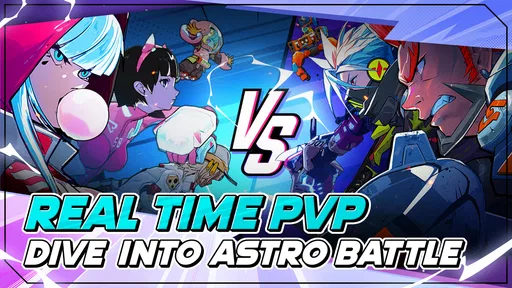
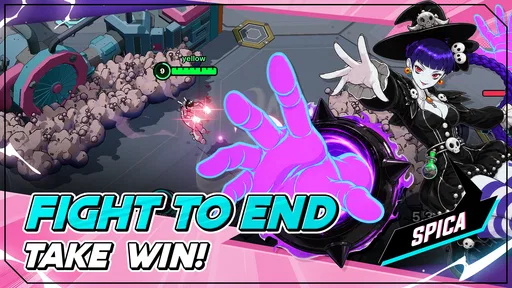
Astro Arena: 3vs3 Battle PvP is a team-based multiplayer action game built around fast three-versus-three matches. Players choose a combatant, join a squad, and compete against another team in real-time battles. Each character typically offers different abilities, strengths, and play styles, so success depends on more than simply attacking. Team composition, positioning, timing, and cooperation are important throughout every match.
Is Astro Arena: 3vs3 Battle PvP free to download and play?
The game can generally be downloaded and played without an upfront purchase, allowing new players to try its main battles before spending money. However, players should expect optional in-app purchases, which may include cosmetic items, progression resources, character-related content, or other bonuses. The exact offers can change through updates, so it is worth reviewing the store listing and payment settings before downloading.
Does Astro Arena: 3vs3 Battle PvP require an internet connection?
Because Astro Arena focuses on real-time 3vs3 PvP matches, a stable internet connection is normally required for its main gameplay. Playing over unreliable Wi-Fi or mobile data can lead to lag, delayed controls, or disconnections, which may affect the entire team. The game is best enjoyed on a consistent network, particularly when entering ranked or competitive matches where connection problems can be costly.
Is Astro Arena: 3vs3 Battle PvP suitable for beginners?
Astro Arena can be approachable for beginners because its basic concept is easy to understand: select a character, work with teammates, and defeat the opposing squad or complete the match objective. Nevertheless, new players may need time to learn each fighter’s abilities, movement patterns, and ideal role. Early practice is useful, since experienced opponents may punish players who ignore positioning or team coordination.
Can I play Astro Arena: 3vs3 Battle PvP with friends?
The team-focused design makes playing with friends one of the most appealing parts of Astro Arena, provided the current version includes the relevant party, invite, or matchmaking features. Coordinating with people you know can make it easier to plan attacks, protect objectives, and build a balanced team. Before installing, check the latest store description and in-game options because multiplayer and social features may vary by platform or update.
Play our best games!


